
payless.host
WordPress hosting explained: costs, plans and pitfalls
Updated Oct 14, 2026
What “WordPress hosting” actually is
WordPress hosting is ordinary web hosting that is sold specifically for running WordPress sites. The server still stores your files and database and makes your site available on the web, but the features are geared around WordPress: one‑click installers, automatic updates, and support that knows the platform.
You can run WordPress on most shared hosting, VPS or cloud plans. A “WordPress” label usually means some of the setup and maintenance is handled for you, or at least made simpler.
Who needs WordPress‑focused hosting
WordPress‑focused hosting suits people who want to use WordPress and do not want to manage servers.
If you plan to run a blog, a small business site or a brochure site on WordPress and expect modest traffic, an entry‑level shared hosting plan is usually enough. Plans like the Web Hosting Launch plan from DreamHost or the Standard Web Hosting plan from InterServer are examples of shared hosting that can run WordPress.
If your site is central to your business, or you expect traffic spikes, a managed WordPress or higher‑tier shared plan can be easier to live with. DreamHost’s DreamPress 1 plan is an example of a managed WordPress plan sold as a step up from basic shared hosting.
If you develop or run several heavier sites, a VPS or cloud plan gives you more control. DreamHost’s VPS Business plan is an example of this kind of hosting, and GPU cloud plans from providers such as Hostinger are designed for heavier workloads again.
Who does not need WordPress hosting
You may not need anything sold as “WordPress hosting” if:
- You are only buying a domain name and email, with no website yet. Domain offers from Namecheap and email plans from Namecheap or Hostinger cover that without any hosting at all.
- Your site is static (HTML only) or built with another system and you do not plan to switch to WordPress.
- You are a developer comfortable managing servers and want a general cloud or VPS plan. Hostinger’s Cloud Professional and Cloud Enterprise plans, or DreamHost’s VPS Business, are examples where you can install WordPress yourself if you need it.
In these cases, the WordPress label adds less than the underlying resources and pricing.
How WordPress‑capable shared hosting is priced
Shared hosting is usually the cheapest way to run WordPress, but the first‑term price and the renewal price can be very different.
DreamHost lists its Web Hosting Launch plan at 2.89 EUR per month, renewing at 10.99 EUR after 12 months, with a three‑year total of 298.44 EUR. The first year is inexpensive; the following years cost more.
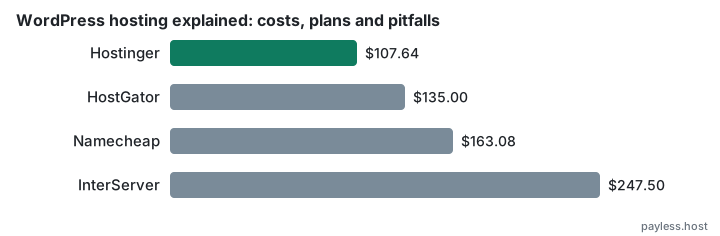
HostGator sells several shared plans that can run WordPress. The Hatchling plan is 3.75 USD per month, renewing at 10.99 USD after 36 months, with a three‑year total of 135.00 USD. The Baby plan is 4.50 USD per month, renewing at 16.49 USD after 36 months, with a three‑year total of 162.00 USD. The Business plan is 6.25 USD per month, renewing at 21.99 USD after 36 months, with a three‑year total of 225.00 USD. The Pro plan is 13.95 USD per month, renewing at 29.69 USD after 36 months, with a three‑year total of 502.20 USD.
InterServer prices its Standard Web Hosting plan at 2.50 USD for the first month, renewing at 7.00 USD after 1 month. The three‑year total is 247.50 USD. This is a simpler structure: a low first month, then a single ongoing price.
SherlockHost keeps the same monthly price from signup through year three on all its shared hosting plans. Linux Hosting start, Website Builder and Web Hosting are each 2.49 GBP per month, with the same price at renewal. Higher plans such as Linux Hosting pro at 6.99 GBP per month, or Linux Hosting maximum at 9.99 GBP per month, also keep the same monthly rate. For WordPress, these are ordinary shared hosting plans that you can install WordPress on.
These examples show three patterns: a low first year then a higher rate (DreamHost), a low multi‑year intro period then a higher rate (HostGator), and a near‑flat price from month two onwards (InterServer) or from day one (SherlockHost).
Managed WordPress and VPS pricing
Managed or higher‑tier plans cost more but include more resources or management.
DreamHost’s DreamPress 1 managed WordPress plan is 14.99 EUR per month, renewing at 19.99 EUR after 12 months, with a three‑year total of 659.64 EUR. It sits above the Web Hosting Launch shared plan in both price and positioning.
The DreamHost VPS Business plan is 13.75 EUR per month, renewing at 31.99 EUR after 12 months, with a three‑year total of 932.76 EUR. This kind of plan is aimed at larger or more complex sites, including WordPress sites that have outgrown shared hosting.
On the cloud side, Hostinger sells Cloud Professional at 15.99 USD per month and Cloud Enterprise at 29.99 USD per month, with three‑year totals of 575.64 USD and 1079.64 USD respectively. Hostinger does not state the renewal price for these cloud plans, so you only know the initial term cost, not what you would pay after that. These plans are general cloud hosting but are capable of running WordPress if you install it.
Domains and email alongside WordPress hosting
Running a WordPress site also means paying for a domain and often for email.
Namecheap focuses on domains and shared services. A .com domain registration under the NEWCOM679 offer is 6.79 USD per year with the same price at renewal. Other domain types start lower and renew higher, such as a .online domain registration promo at 0.98 USD per year, renewing at 2.88 USD after 12 months with a three‑year total of 80.88 USD, or a .dev registration promo at 10.98 USD per year, renewing at 15.98 USD after 12 months with a three‑year total of 515.28 USD.
Email is often separate from hosting. Namecheap’s Private Email – free trial is 0.00 USD per month, renewing at 1.24 USD after 1 month, with a three‑year total of 43.40 USD. Hostinger’s Mail Starter and Starter Mail API plans are 0.39 USD per month, renewing at 1.59 USD after 48 months, with three‑year totals of 14.04 USD. The Standard Mail API plan is 0.99 USD per month, renewing at 2.79 USD after 48 months, with a three‑year total of 35.64 USD.
SherlockHost includes a deal of a free domain with Unlimited UK Hosting, so in that specific case the first domain is bundled with the hosting plan.
These extras matter because the total cost of a WordPress site is hosting plus domain plus any paid email service.
How to choose a WordPress‑capable plan
Start with the type of site you are running and how long you expect to keep it.
For a small personal or brochure site, an entry‑level shared plan such as SherlockHost’s Linux Hosting start at 2.49 GBP per month or InterServer’s Standard Web Hosting can be enough. Here the main differences are price stability and whether you are comfortable with the renewal rate. SherlockHost keeps one price, while InterServer moves to 7.00 USD per month after the first month.
If you want a low first term and are prepared for a higher later price, a plan like DreamHost’s Web Hosting Launch at 2.89 EUR per month or HostGator’s Hatchling at 3.75 USD per month can be attractive for the first stretch. The trade‑off is that the cost from the second term is much closer to, or above, other options.
If your WordPress site brings in revenue, paying more for managed WordPress or VPS hosting can make sense. DreamHost’s DreamPress 1 or VPS Business, or Hostinger’s cloud plans, sit in that band: they cost more over three years but come with more capacity or management.
Common mistakes with WordPress hosting
One common mistake is budgeting only by the intro price. A plan like DreamHost’s Web Hosting Launch looks very cheap at 2.89 EUR per month, but renews at 10.99 EUR after 12 months. HostGator’s shared plans keep their intro price for 36 months, then renew at 10.99 USD, 16.49 USD, 21.99 USD or 29.69 USD per month depending on plan. InterServer and SherlockHost keep their ongoing prices clearer, but InterServer still moves from 2.50 USD in the first month to 7.00 USD per month after that.
Another mistake is paying for more capacity than you use. A small WordPress blog does not usually need a VPS such as DreamHost’s VPS Business, or a cloud plan like Hostinger’s Cloud Enterprise, in its early stages. Starting on shared hosting and moving later can keep three‑year costs down.
A third mistake is ignoring domains and email in the budget. Domain extensions like .co from Namecheap’s registration promo at 19.98 USD per year, renewing at 38.48 USD after 12 months with a three‑year total of 1163.28 USD, cost far more than a simpler .com at 6.79 USD per year with the same price at renewal. Choosing separate email or bundled options, such as the free domain with SherlockHost’s Unlimited UK Hosting, also changes the total you pay over time.
Finally, some people choose based only on brand rather than reading the renewal section. Plans where the renewal price is not stated, such as Hostinger’s Cloud Professional and Cloud Enterprise, leave you with less certainty about what the long‑term cost of running your WordPress site will be.